
Quick answer
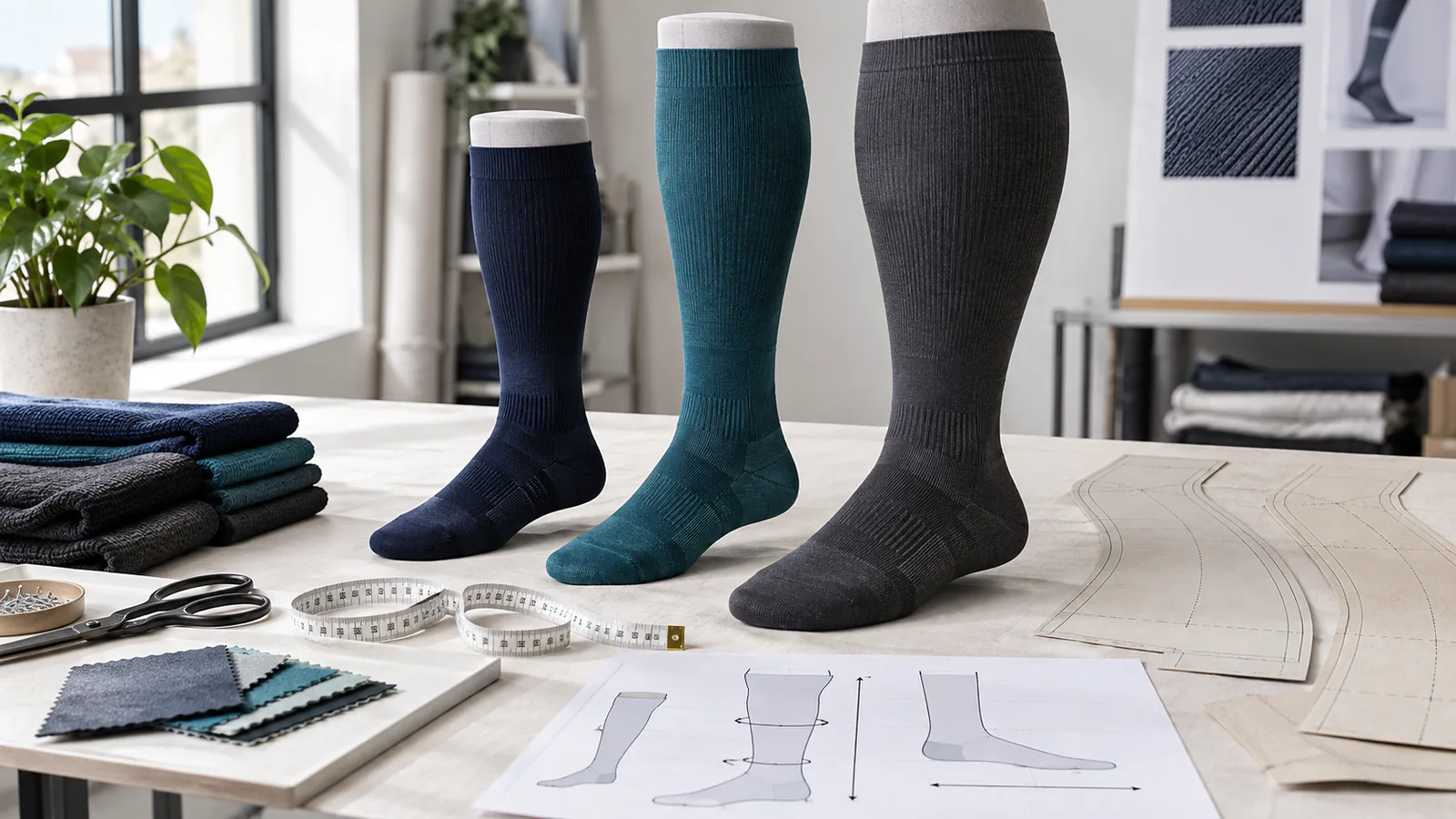
For short-leg, wide-calf compression socks, collect five measurements separately: foot length, ankle circumference, fullest-calf circumference, floor-to-knee-crease height and circumference at the intended cuff position. Build a size matrix that does not assume a wide calf comes with a large foot or long leg. Approve boundary-size samples for heel position, cuff location, rolling, digging and finished pressure before bulk production.
A wearer can have a wide calf, a comparatively small ankle, a short lower leg and a small foot at the same time. Conventional sock grading often moves every dimension upward together, so choosing a larger size for calf room can leave a loose foot and misplaced heel. Choosing by shoe size alone can create an over-stretched calf and a cuff that sits too high, folds or digs in.
This is not a rare edge case in customer language. Recent discussions include nurses looking for wide-calf socks for smaller feet, plus-size wearers describing a calf and ankle mismatch, and petite wearers asking for shorter leg lengths without losing calf room. These anecdotes do not establish clinical performance, but they reveal a useful product-development gap: multidimensional fit.
Why one “wide calf” label is not enough
Wide calf usually describes only one circumference. It says nothing about ankle taper, cuff position, foot length, heel placement or the vertical distance available below the knee. A sock can therefore meet its published maximum calf circumference and still fit poorly elsewhere.
For an OEM or private-label program, treat the target wearer as a set of dimensions rather than a general body-size category. The size architecture should explain which dimensions change together, which can be held relatively stable and where an additional short or petite length is commercially justified. Our compression sock size-chart guide explains how clearer ranges can also reduce avoidable fit-related returns.
The five measurements to put in the fit brief
Measure at the time and under the conditions appropriate to the intended fitting protocol. Use a flexible tape without pulling it into the skin, record the unit, and state whether the value is a body measurement or a relaxed garment measurement. A supplier cannot reliably interpret a spreadsheet that mixes the two.
| Measurement | Where to measure | What it controls in development |
|---|---|---|
| 1. Foot length | Heel to longest toe, with shoe size recorded only as a secondary reference | Foot pocket, toe position and heel alignment |
| 2. Ankle circumference | Narrowest area above the ankle bones, following the chosen fitting protocol | Anchor fit and the reference area used in a graduated-pressure design |
| 3. Fullest-calf circumference | Largest horizontal circumference of the calf | Leg width, stretch demand and calf size band |
| 4. Lower-leg height | Floor or heel base to the crease behind the knee while standing as specified | Finished leg length and safe cuff location below the knee |
| 5. Cuff-site circumference | Around the leg where the top band is intended to sit | Top-band extension, taper and cuff comfort |
The fifth measurement is not always identical to the fullest calf. On a short leg, the cuff may land close to the widest point unless the sock length and taper are adjusted. Recording both circumferences helps the pattern maker understand whether the upper leg narrows, stays full or increases at the proposed cuff site.
Convert measurements into a useful size matrix
Do not solve a wide calf by simply scaling the entire sock. Consider a matrix that separates foot size, calf band and leg length. A limited launch might combine two foot groups, two calf groups and a standard/short length only where demand supports the extra SKUs. A broader medical or specialist channel may need more combinations, but every combination adds sampling, labeling, inventory and inspection work.
State priority rules when a wearer falls between columns. For example, an internally approved protocol may prioritize ankle and calf circumference, then select a compatible short length and foot group. The correct hierarchy depends on the product, pressure claim, target market and professional fitting requirements; it should not be improvised from a generic online chart.
Share actual lower and upper limits rather than “S–XXL” alone. Include units, measurement diagrams, tolerance language and a note that the chart applies to that exact style. Yarn, stitch count, compression level and construction can change usable fit even when the nominal garment size remains the same.
Why short socks roll and cuffs dig in
Rolling and digging can have several causes. An overly long sock may crowd below the knee; folding the excess doubles local layers and can create a tight band. A top band that is too narrow or extended too far can concentrate force at its edge. Insufficient taper, poor cuff recovery, a leg panel stretched beyond its intended range or a heel that never reaches its pocket can also shift tension upward.
Conversely, a cuff can roll when it is too loose for the intended site, when the sock is pulled beyond its designed height, or when the construction changes after repeated laundering. A Reddit discussion about rolling, pinching and difficult donning shows why a single symptom should not be assigned one universal cause.
Do not tell wearers to fold, double or scrunch a compression sock to shorten it. Packaging should show the intended cuff location and direct users to stop and seek qualified advice if the product causes pain, numbness, skin changes or other concerning symptoms. Product content should support correct use without diagnosing the wearer.
Engineer the cuff as a system
The cuff includes more than its visible height. Elastic yarn, knit structure, relaxed circumference, extension range, edge finish, silicone or other stay-up features, and the transition into the leg panel all affect how it behaves. A wider band can distribute contact over a larger area, but width alone does not guarantee comfort. A soft hand feel also does not prove that pressure is appropriate.
If a silicone grip is proposed, define its pattern, width, coverage and compatibility requirements, then evaluate the final sock. The silicone grip-top buyer guide covers sample and bulk checks. For a short-leg style, first correct vertical fit and cuff placement; grip should not be used to compensate for an unsuitable length.
Approve boundary sizes, not only the middle sample
A development sample made for a middle size may hide the exact failure the program is intended to solve. Request at least the combinations most likely to stress the grading system: smallest foot with widest calf, smallest ankle with widest calf, shortest leg near the upper calf limit, and each opposite boundary included in the launch.
During fit review, confirm that the heel sits in the heel pocket, the toe is not folded, the ankle is free from loose channels, the calf panel is not visibly over-extended and the cuff finishes below the knee at the documented location. Observe whether the sock stays flat during the agreed movement trial without folding the top. Record the wearer or form measurements with the sample result so photographs remain interpretable.
Use the compression sock sample approval checklist to capture measurements, construction version, yarn lot, colorway, care method and approval status. Retain signed physical references for the critical size combinations, not one unlabelled pair.
Pressure evidence must match the actual size and construction
Fit observations do not verify graduated pressure, and a wide-calf claim does not establish a medical indication. Pressure depends on the finished construction, circumference and extension on the relevant test form. A result for a standard-calf size should not automatically be applied to a newly widened or shortened version.
The BS 661210 product scope includes compression and stiffness testing for graduated compression hosiery. Buyers should select the applicable market standard, apparatus, conditioning, sample sizes, test locations and acceptance rules with a qualified laboratory. Do not convert a nominal yarn or machine setting into an unsupported mmHg claim.
Check care-related dimensional change
A well-fitting first sample can become shorter, tighter at the cuff or looser in recovery after an unsuitable care process. Define how laundering will be simulated and what measurements will be repeated. ISO 6330:2021 provides domestic washing and drying procedures; the project still needs a selected procedure, cycle count and acceptance criteria.
After the agreed cycles, compare leg length, cuff and ankle dimensions, appearance, recovery, pressure where required and fit on the same boundary profiles. Align the care label with the validated route. If tumble drying was not evaluated, do not imply that it is acceptable.
Put these details in the RFQ
- Five body-measurement ranges, diagrams, units and the intended fit protocol.
- Foot groups, calf groups and short/standard leg lengths in the proposed SKU matrix.
- Target cuff location, top-band construction and whether grip elements are required.
- Pressure class or range, applicable test method, sizes to test and report format.
- Boundary-size sample combinations and fit-approval records required before bulk.
- Care procedure, dimensional-change criteria and bulk measurement tolerances.
NextCompSox can review the matrix as a product-development brief rather than treating “petite wide calf” as one undefined size. Request a short-leg, wide-calf OEM fit review with the five measurement ranges, target pressure, size count, annual volume and channel requirements.
Buyer takeaway
Short legs, wide calves and smaller feet are independent design inputs. Measure all five relevant areas, separate foot, calf and height grading where the business case supports it, and approve the most difficult boundary combinations. Then connect fit to documented pressure testing, care validation and traceable bulk measurements. That approach addresses rolling and cuff complaints at the specification level instead of adding another vague “wide” label.
Frequently asked questions
Can someone have wide calves but small feet and ankles?
Yes. Foot length, ankle circumference, calf circumference and lower-leg height do not always increase together. A useful compression-sock chart treats them as separate fit inputs instead of scaling the whole sock from shoe size.
Which five measurements are needed for short-leg, wide-calf compression socks?
Record foot length, narrowest-ankle circumference, fullest-calf circumference, floor-to-knee-crease height and circumference at the intended cuff site. Follow the fitting protocol selected for the product and clearly separate body measurements from garment measurements.
Why do compression socks roll down on short legs?
Possible causes include excessive leg length, an unsuitable cuff position, incorrect taper, a band that is too loose or too concentrated, over-stretching and care-related dimensional change. Rolling has multiple causes, so inspect the complete fit rather than assuming one fix.
Should a wearer fold the top of a compression sock if it is too long?
Do not design instructions around folding, doubling or scrunching the top. Those actions can concentrate layers and local pressure. The product should offer an appropriate length, show the intended cuff position and direct wearers with concerning symptoms to qualified advice.
Does a wide-calf version need separate pressure testing?
The applicability of existing results must be reviewed because the finished circumference, extension, length or construction has changed. Define representative sizes and boundary cases with a qualified laboratory under the standard and acceptance criteria required for the target market.
How many size combinations should a private-label brand launch?
There is no universal number. Balance the measured target population and channel needs against sampling, labeling, inventory and inspection complexity. Cover the important foot, calf and length combinations, then validate the boundary sizes before bulk production.