
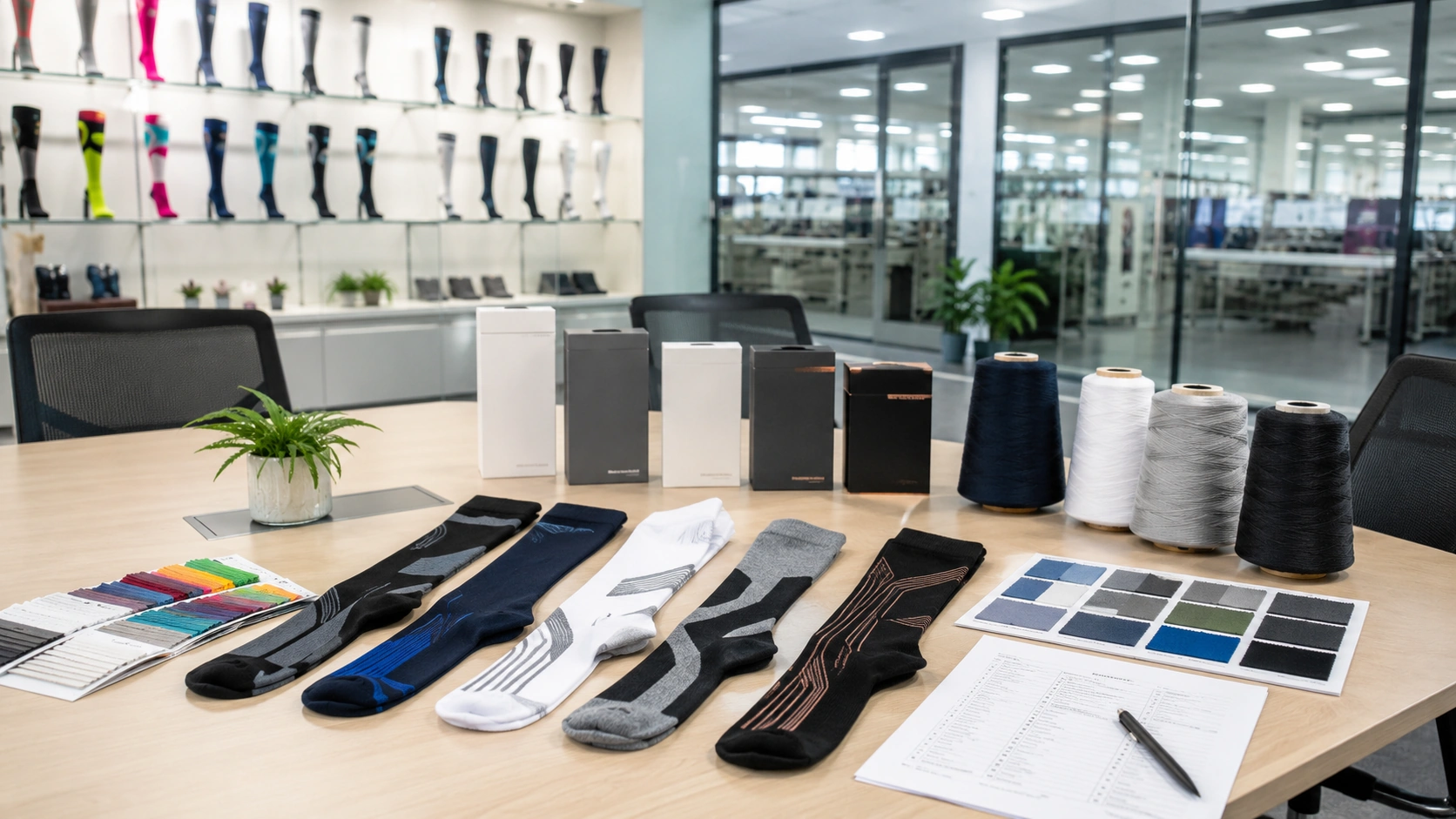
When buyers compare wholesale compression socks, they often start with color, price, and MOQ. Those points matter, but they are only part of the sourcing decision. A successful B2B program also needs the right compression range, size system, fabric hand feel, cuff comfort, packaging format, and product education materials.
Before requesting a quote, define where the socks will be sold and who will wear them. A travel retail set, a nurse-focused work sock, an everyday wellness sock, and a sports recovery sock may look similar at first glance, but each one needs different fit expectations, copy, packaging, and product details.
Start with the target channel
A clear channel brief helps the supplier recommend the right direction. Marketplace sellers may prefer multi-pair packs with simple color assortments and strong size-chart support. Medical supply distributors may focus on compression clarity, conservative colors, and product instructions. Workwear and uniform buyers often care about durability, stay-up cuff comfort, and practical color options.
- Everyday wellness: soft hand feel, easy-on comfort, simple packaging, broad sizing.
- Travel: lightweight comfort, anti-fatigue positioning, compact retail packaging.
- Work and nurses: stay-up cuff, reinforced heel and toe, long-shift comfort messaging.
- Sports and recovery: breathable yarn direction, secure fit, performance color options.
- Medical supply: clear compression range, size guidance, cautious and accurate product copy.
Clarify compression level and product style
Our in-stock compression sock programs are 10-20 mmHg. 20-30 mmHg can be developed as a custom order when the target market, quantity, and product positioning support a stronger-support direction.
Style also matters. Knee-high socks are common for everyday, travel, and work use. Open-toe options may be useful for warmer markets or customers who prefer their own toe fit. Zipper styles can be considered for buyers who want easier wearing, while wide-calf sizing can help reduce fit complaints in inclusive retail programs.
Build a size system before packaging
Size confusion is one of the most common causes of returns and negative reviews. A good compression sock size chart should not rely only on shoe size. For many programs, buyers should discuss ankle circumference, calf circumference, leg length, and shoe-size conversion. This is especially important for wide-calf, plus-size, medical supply, and long-shift work categories.
When developing private-label packaging, make the size chart easy to read. If the buyer sells online, the same sizing information should also be prepared for product images, A+ content, product descriptions, and customer service scripts.
Review material, cuff, toe, and durability details
Many compression socks use nylon, polyester, spandex, cotton blends, or other yarn combinations. Buyers should compare not only the fiber content but also the feel, stretch recovery, breathability, and washing performance. A product that looks good in a sample photo still needs to feel comfortable when worn for several hours.
- Cuff: should stay up without feeling overly tight for the target user.
- Toe seam: should feel smooth enough for daily wear.
- Heel and toe: reinforced areas can improve durability perception.
- Elastic recovery: socks should retain fit after repeated use and washing.
- Color fastness: important for dark colors and multi-pack retail sets.
Plan packaging for the sales channel
Wholesale compression socks can be packed with paper bands, poly bags, boxes, zipper pouches, gift sets, or multi-pair retail bundles. The packaging should match the product price point and buyer expectations. A budget multi-pack may need clear sizing and simple presentation. A premium private-label program may need a stronger box, instruction card, and product benefit layout.
Packaging should also explain the product without overpromising. Use clear language around compression range, fit, comfort features, material direction, and care instructions. Avoid unsupported medical claims unless your team has the required documentation for your target market.
Use samples to reduce production risk
A sample is not only a color check. It should be used to review fit, pressure feel, cuff comfort, toe seam, packaging, label information, and product photography potential. If your brand sells through Amazon or other online channels, sample review should include image planning and copy planning as well.
For new programs, it is useful to prepare a comparison sheet with target product, sample feedback, final adjustments, packaging notes, and bulk order requirements. This helps both buyer and supplier avoid confusion before production.
What to send when requesting a quote
A clear RFQ helps suppliers respond faster and more accurately. Send the target channel, compression range, sock height, size range, color direction, logo needs, packaging format, estimated quantity, sample timeline, and any reference styles. If you already have a target retail price or competitor example, include it as context.
Good sourcing is a communication process. The more clearly you describe the buyer group, sales channel, and product goal, the easier it is to build a compression sock program that works for both retail presentation and long-term repeat orders.