
Quick answer
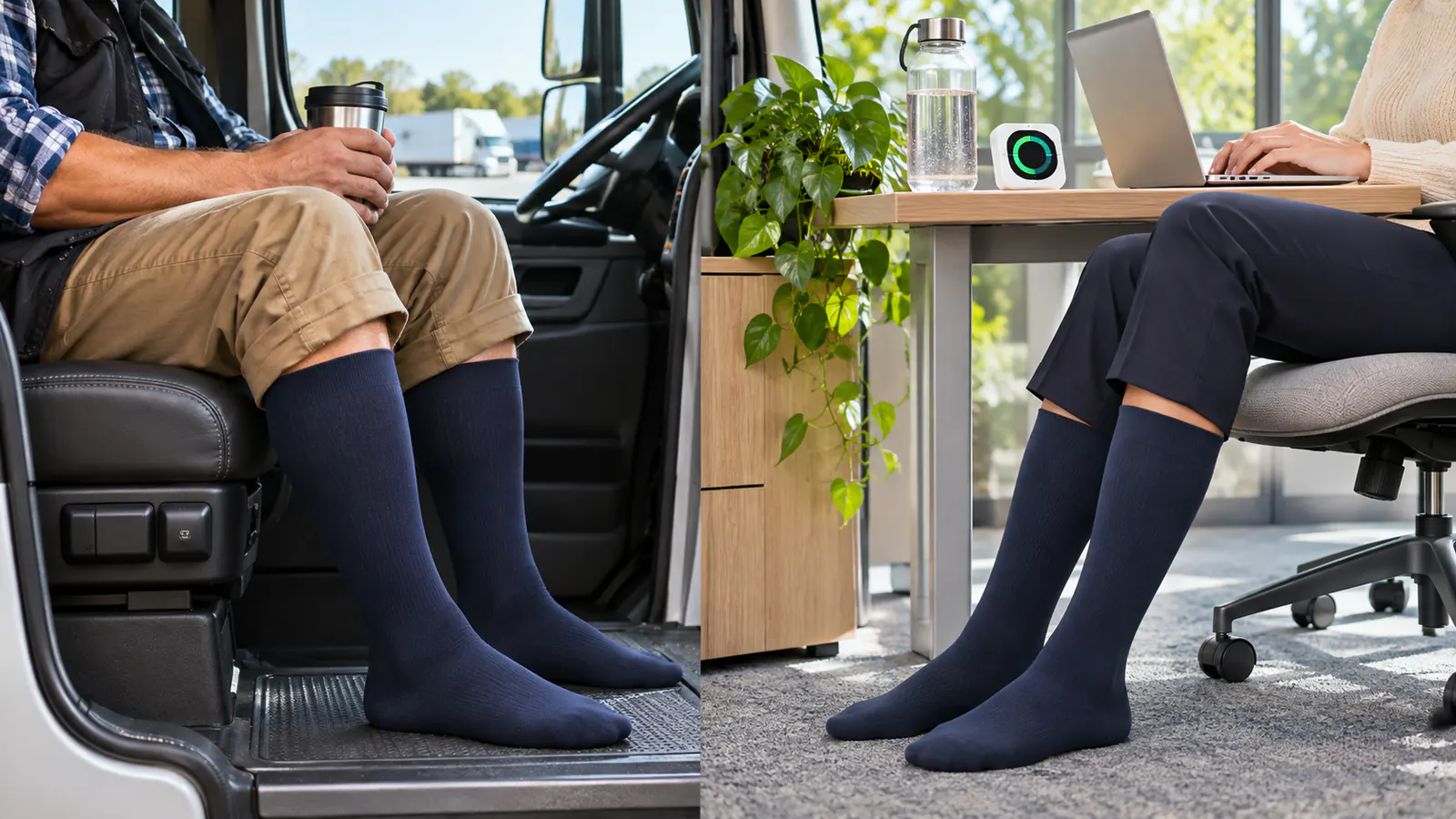
A driver or desk-worker compression sock program should prioritize reliable sizing, all-day cuff comfort, shoe-compatible foot construction, moisture management and clear donning instructions. Long sitting is one factor associated with blood-clot risk, but socks do not remove that risk or replace movement, hydration advice, medical assessment or prescribed prevention. Market the product around verified construction and comfort, include activity-break guidance from authoritative sources, and refer higher-risk customers to clinicians.
Drivers and office workers share one merchandising story—many hours seated—but their footwear, heat exposure, break opportunities and employer programs can differ. A credible retail brief turns those differences into design choices instead of using an unsupported “prevents clots” headline.
Understand long-sitting risk without exaggeration
The CDC explains that extended travel over four hours can increase clot risk and recommends leg movement and periodic walking when possible. Risk is generally small for most people but rises with other factors. A sock is not permission to remain motionless and is not a universal preventive treatment.
Separate drivers from a generic travel persona
Truck and delivery drivers may face heat, work boots, repeated entry and exit, long shifts and limited storage. Desk workers may prioritize business-shoe fit and discreet colors. Build channel personas, then use the air-travel retail guide only where its journey assumptions actually match.
Design for the footwear system
Check toe-box volume, heel placement, insole friction and boot height. Cushioning can help perceived comfort but adds bulk; mesh can alter stretch. Test the full sock inside representative shoes during sitting and walking. Our work-shoe and toe-box fit guide details those checks.
Make all-day cuff comfort measurable
Define cuff width, finished circumference, recovery and acceptable roll-down. Evaluate edge marks, movement and sitting with the knee bent. A grip top may help some constructions, but it requires skin-contact and care review; see the silicone grip-top buyer guide.
Give customers a workable size path
Use ankle, calf, foot and lower-leg ranges rather than shoe size alone. Long shifts make wrinkles, heel mismatch and a cuff in the knee crease especially noticeable. Keep short, regular and tall needs visible and provide a route for customers whose measurements cross size bands.
Plan moisture and care for frequent wear
A daily-use program needs multiple pairs, realistic drying instructions and wash durability. Wicking, drying and odor-control claims require separate evidence. Link care guidance to the materials actually sold. The washing and durability guide helps buyers set label and test expectations.
Use responsible copy and escalation language
Avoid guarantees to prevent deep-vein thrombosis, swelling or disease. Explain that sudden one-sided swelling, pain, chest pain or breathing difficulty needs urgent professional attention, not a retail sock recommendation. People with prior clots, recent surgery, pregnancy or other risk factors should seek individualized advice.
Do not disguise a medical promise with lifestyle wording such as “circulation guaranteed.” Review headlines, icons, testimonials, marketplace bullet points and paid advertisements together, because regulators and customers see the overall impression. A disclaimer at the bottom cannot correct a prominent unsupported claim at the top.
Support activity breaks, not passive wear alone
Packaging and employer materials can encourage regular walking when safe, ankle movements and adherence to workplace or clinical guidance. NIOSH resources for long-haul drivers help position the product inside a broader occupational-health conversation.
Validate the product and the claims separately
Pressure, fit, recovery, colorfastness and durability need product tests. Health or performance claims need evidence appropriate to the exact wording and market. A successful wear trial can reveal comfort problems but does not prove prevention of a medical outcome.
Build an employer-ready assortment
Workplace programs need more than a single black style. Decide whether the range will include boot-compatible cushioning, dress-shoe thickness, high-visibility accents, extended calves and short or tall lengths. Keep the pressure and fit architecture consistent enough that replenishment is straightforward, while making each construction unmistakable on cartons and size labels.
Multipacks can encourage rotation, but every pair still needs correct size and care information. If the outer package is discarded at work, consider durable inside labels or a simple retained instruction card. Confirm any textile, country-of-origin, responsible-business and language requirements for each market before printing.
Audit the customer journey from search to first wear
Review the ad, product page, size selector, confirmation email, package and donning instructions as one sequence. Claims and pressure information must agree throughout. Make measurement help accessible on mobile, because many drivers may shop away from a desk. Avoid defaulting a shopper into a pressure or size based only on occupation.
After launch, track fit returns, cuff complaints, heel wear and misunderstandings about medical protection. Those signals can improve the product and the copy, but they are not clinical outcome evidence. Escalate any safety complaint through a documented process and preserve the lot information.
Private-label program checklist
- Driver or desk-work persona, footwear and climate.
- Ankle, calf, foot and length size architecture.
- Cuff, toe, heel, cushion and moisture specifications.
- Pressure and wash-verification plan.
- Movement, fitting, care and warning copy.
- Target-market regulatory and health-claim review.
- Multipack, replacement and employer-program packaging.
Request a driver or desk-worker OEM program review with your channel, footwear, climate, sizes, pressure direction and planned claims.
Buyer takeaway
The strongest long-sitting product is comfortable enough to wear, specific enough to fit and honest about its role. Combine a verified sock with movement guidance and clear escalation language; never imply that a garment removes an individual's medical risk. Review fit complaints and claim questions regularly so the next production order and the next version of the product page improve together.
Frequently asked questions
Do compression socks prevent blood clots for every driver?
No product should be presented as a universal guarantee. Long-sitting risk depends on individual factors, and movement and professional advice remain important.
Which compression level should desk workers choose?
A blog cannot prescribe an individual level. Brands should label verified products accurately, and people with symptoms or risk factors should consult a qualified clinician.
What features matter inside work boots?
Toe-box volume, heel stability, abrasion, moisture behavior, cushion thickness and cuff placement all matter. Test the complete footwear system.
Should the size chart use shoe size only?
No. Add ankle, calf and lower-leg measurements because shoe size cannot predict leg fit.
What should packaging say about movement?
Use authoritative guidance to encourage safe walking or ankle movement at intervals, while making clear that socks do not replace risk assessment or prescribed care.