
Quick answer
Maternity compression socks should be easy to size, put on and tolerate as the body changes. Use ankle, calf, foot and lower-leg measurements; provide clear remeasurement and donning instructions; and test cuff comfort, heat, moisture, recovery and pressure on the finished product. Do not promise that every pregnant customer will prevent a clot or safely use the same pressure. Sudden or one-sided swelling, severe headache, vision changes, chest pain or breathing difficulty require prompt professional assessment.
Pregnancy discussions frequently mention swelling, warm weather, difficulty reaching the feet and a mismatch between foot and calf sizes. These are valuable product-design signals, not a basis for diagnosing a customer or recommending an individual pressure level.
Place clinical guidance before marketing
ACOG explains pregnancy-related clot risk and advises individual risk assessment. A retail sock cannot replace maternity care. Product pages should separate general fit information from clinical decisions and avoid universal prevention or treatment claims.
Include clear red-flag language
The NHS pregnancy guidance notes that gradual swelling can be common but sudden increases, severe headache or vision problems can require urgent advice. One-sided pain or swelling, chest pain and breathing difficulty also warrant prompt assessment. Do not funnel these symptoms into a product recommendation.
Build sizing for changing measurements
Use ankle, calf, foot and lower-leg ranges and explain when to remeasure. Shoe size alone is not enough, and an early-pregnancy purchase may not fit later. The measurement guide offers a clear consumer sequence, while packaging should state the brand's exact landmarks.
Make donning accessibility part of development
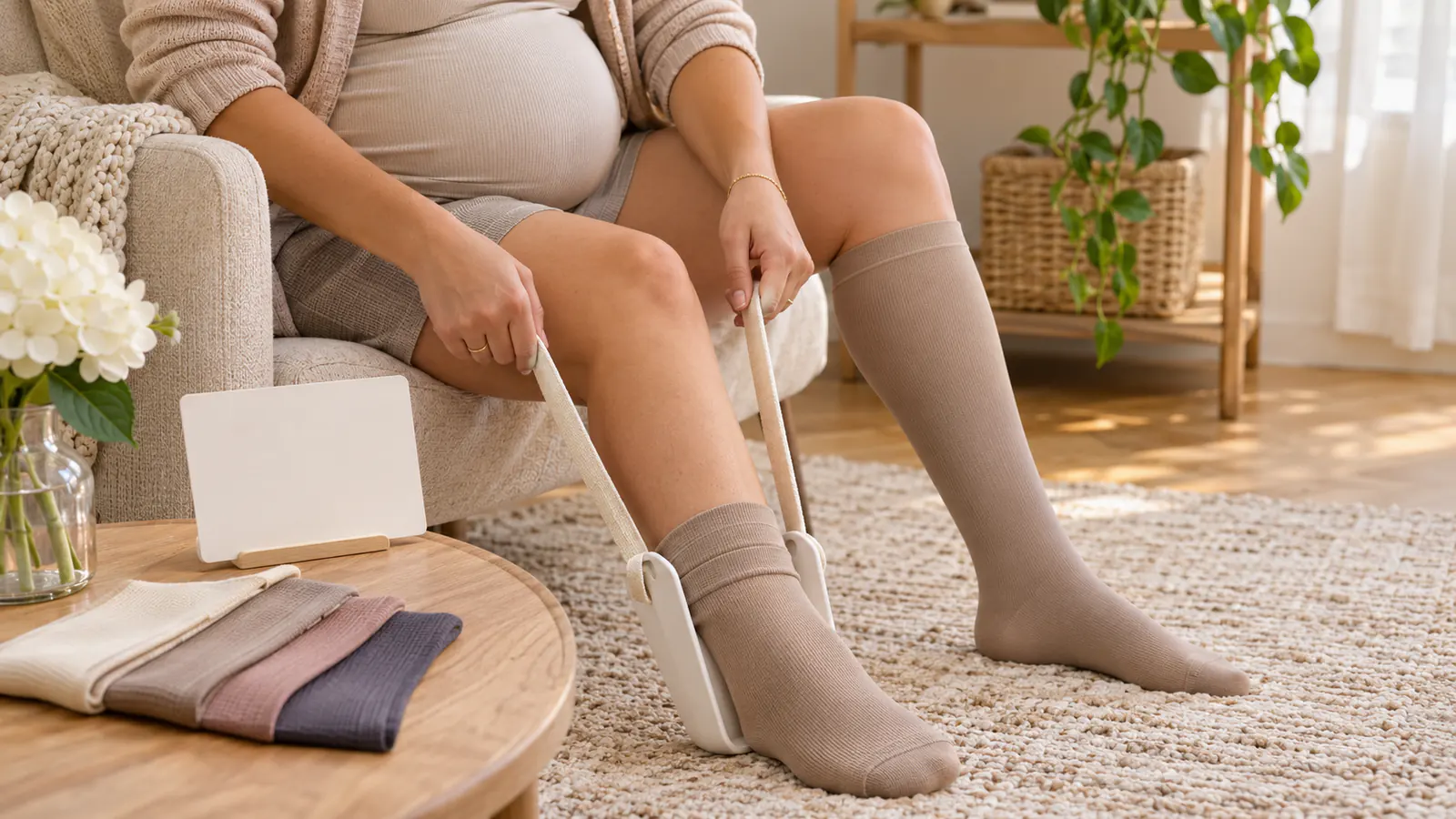
Reaching the foot can become difficult. Evaluate pull-on effort, heel location, grip surfaces and compatibility with common donning aids. Provide stepwise instructions that do not require excessive bending. The donning-aids guide covers glove, frame and technique considerations.
Manage warmth without vague cooling promises
Use light, smooth yarns and mapped mesh only where the construction remains stable. Test wicking and drying separately and distinguish laboratory measures from subjective coolness. The cooling fabric testing guide helps buyers choose defensible language.
Design a secure but gentle cuff
Check width, circumference, edge marks, rolling and position while sitting. A high cuff must not enter the knee crease. Do not market visible marks alone as proof of dangerous pressure, but instruct customers to stop and seek advice for pain, numbness, color change or concerning symptoms.
Keep pressure selection outside generic copy
A blog should not tell every pregnant person to wear the same mmHg. Label the verified product accurately and advise consultation when the customer has symptoms, a clot history, vascular disease, recent surgery or a clinician-directed plan. Medical positioning and claims need destination-market review.
Use the same cautious approach with testimonials and influencer content. A personal story about reduced swelling does not establish that the product treats a condition for every viewer. Give partners approved measurement, care and referral language, and monitor published posts for claims that exceed the product's evidence or regulatory position.
Test the exact finished product
Verify pressure, dimensions, stretch recovery, wash stability, seam quality, colorfastness and material safety on production-equivalent samples. If sizes or knit programs differ, document why the test plan represents them. Use the sample approval checklist to lock the golden sample before bulk production.
Make packaging calm and actionable
Show measurement ranges, donning steps, care, material, pressure, intended use, warnings and a support contact. Avoid fear-based pregnancy messages. Explain that fit may change and that users should follow their maternity-care team's advice when compression has been recommended.
Design the complete purchase and support journey
Make the size chart readable on a phone and explain the best time and posture for measurement according to the brand protocol. Offer a non-judgmental route to ask fit questions without collecting unnecessary pregnancy or health details. Order confirmation and package inserts should repeat the same pressure, fit, red-flag and care information shown before purchase.
Customer service needs boundaries. It may explain measurements, garment features and returns, but it should not diagnose swelling or choose a medical pressure. Prepare an escalation script for symptoms and a product-safety record that retains style, size, lot, purchase date and the customer's description when voluntarily provided.
Review materials and skin contact carefully
List fiber composition accurately and review yarns, dyes, grip components and finishing agents for the target market. “Hypoallergenic” and “latex-free” are not casual synonyms for soft. If the product makes a natural-rubber-latex statement, collect component-level supplier evidence and use wording appropriate to the market. Wash samples before wear trials when the care instruction recommends it, and investigate persistent irritation rather than dismissing it as normal compression.
Plan inventory around changing fit
A maternity assortment may need more calf and length combinations rather than more colors. Use conservative forecasts, keep measurement-based exchanges simple and monitor which combinations repeatedly sell out. Multipacks can support rotation, but do not encourage customers to stock several identical sizes when their measurements may change over the pregnancy.
OEM maternity checklist
- Target trimester or general maternity channel and intended claims.
- Measurement ranges and remeasurement guidance.
- Donning accessibility and aid compatibility.
- Cuff, toe, heel, heat and moisture specifications.
- Pressure, recovery, wash and safety test plan.
- Red flags, warnings and referral language.
- Regulatory review for each sales market.
Request a maternity compression sock OEM review with your market, size data, pressure direction, materials, donning plan and intended claims.
Buyer takeaway
A responsible maternity product is measurable, accessible and modest in its claims. Pair changing-size guidance and easier donning with verified construction, clear red flags and qualified clinical referral. That protects customers and builds a more credible brand.
Frequently asked questions
Are compression socks safe for every pregnancy?
Individual circumstances differ. Customers should follow maternity-care advice, especially when they have symptoms, clot risk, vascular disease or another medical concern.
Which compression level should pregnant customers buy?
A general article should not prescribe one level. Brands must label verified products accurately, while individual selection belongs with a qualified healthcare professional.
When should measurements be repeated?
Because swelling and body measurements can change, remeasure when fit changes, the cuff moves, wrinkles appear or the care team advises it. State a clear brand protocol.
How can a maternity sock be easier to put on?
Accurate sizing, a stable heel, clear instructions, grip gloves and compatible donning aids may help. Accessibility should be evaluated during sample approval.
What symptoms should not be handled as a sock-sizing problem?
Sudden or one-sided swelling, severe headache, vision changes, chest pain or breathing difficulty require prompt professional assessment rather than retail troubleshooting.