
Quick answer
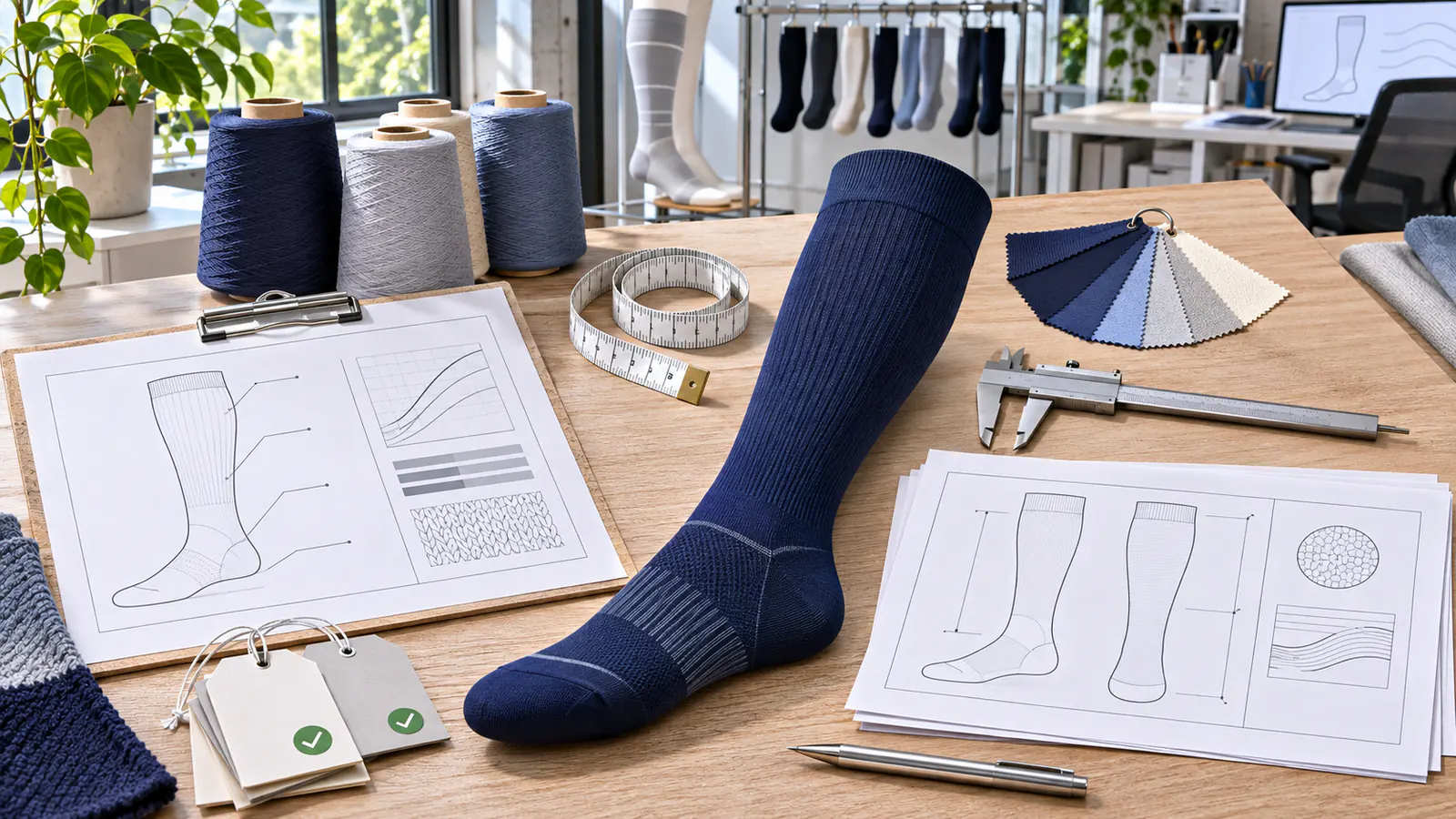
A compression sock tech pack should identify the style and revision; intended channel and pressure direction; fiber and yarn bill of materials; knit zones; foot, ankle, calf, cuff and length measurements by size; artwork and color references; test methods and acceptance limits; labeling, packaging and carton details; and sample or bulk approval responsibilities. Every quotation, sample and inspection should reference the same revision so changes do not disappear into email threads.
A photograph and the request “make this in our colors” do not define a compression sock. The factory still has to assume yarn, dimensions, pressure, cuff, heel, toe, size grading and packaging. Different assumptions create quotations that cannot be compared and samples that are difficult to approve.
A tech pack is the controlled source of truth for development. It does not need to be an elaborate fashion-software export; a clear spreadsheet, drawings and linked artwork can work. The important point is that each requirement has an owner, value, tolerance and revision.
Give every style a unique identity and revision
Start with buyer name, style name, product code, season or program, issue date and revision number. Add a change log that states what changed, why, who approved it and which samples are obsolete. Use the same identity on quotations, sample labels, test requests, packaging artwork and inspection reports.
Connect this record to the approval flow in the compression sock sample checklist. A comment such as “cuff better now” is not a specification change until the related construction or dimension is recorded.
Define intended channel and product positioning
State whether the program is stock wholesale, private label, sport, travel, workwear, wellness or another defined direction. Record the target market, intended wearer description, labeled pressure range and exact claims planned for packaging. Claims influence evidence and regulatory review; the factory should not invent them from a product name.
If the program compares stock and custom routes, use the private-label manufacturing guide to separate features that are fixed from features still open for development.
Build a zone-by-zone bill of materials
List generic fiber content and nominated yarn references where required. Identify main leg yarn, covered elastane, cuff, heel, toe, sole, mesh, logo and any functional yarn zone. Include yarn count or linear density, color, supplier, finish and permitted substitution rules. Do not use a marketing fiber name as the only material specification.
The compression sock materials guide explains common fiber roles. The tech pack should also state whether the final label composition is based on verified product data and which components are included in the calculation.
Map knit structures and construction details
Use front, back, medial, lateral and sole views as needed. Mark cuff depth, rib or mesh zones, logo location, cushioning, arch zones, heel pocket, toe closure and reinforcement transitions. Provide dimensions from fixed landmarks rather than placing artwork by eye.
Record machine or needle constraints when known, but specify the required outcome as well. The new knit-density engineering guide explains how yarn and machine parameters interact, while the factory remains responsible for confirming feasibility.
Define body and garment measurements separately
A size chart describes the intended body measurements; a garment table controls the relaxed finished sock. Include foot length, heel-to-toe, leg length, cuff width, ankle, calf and other project-specific points with units and tolerances. Define exactly how the sock is laid, conditioned and measured.
ISO 8559-1:2017 provides anthropometric definitions for body measurement and size-profile work. Use an appropriate measuring protocol and the compression sock size-chart guide to keep consumer-facing ranges aligned with development data.
Write the compression and test plan
State the labeled pressure range, graduated or uniform direction, sizes selected for verification, measurement locations, conditioning, method, repetitions and pass criteria. Add dimensional stability, stretch/recovery, colorfastness, abrasion, pilling or functional tests only where relevant to the product and claim.
The compression verification guide helps connect reports to the exact style. For care validation, ISO 6330:2021 specifies domestic washing and drying procedures for textile testing; the tech pack must still name the selected procedure and cycle count.
Lock artwork, colors and visible tolerances
Attach vector logo files, knit artwork grids, color standards and placement dimensions. Note whether colors are yarn-dyed, printed or transferred, and define approval lighting or instrument conditions where needed. Include acceptable logo distortion at worn extension and rules for floats, joins and pattern alignment.
The custom-logo guide compares branding routes. Keep artwork revision separate from the garment revision but list both on the approved sample record.
Specify labeling, packaging and carton data
Provide fiber, origin, responsible-business identity, care, size, pressure and warning fields required for the destination market. Attach band, box, bag, insert and carton artwork with dieline version, barcode data, pack count and placement. Identify which information is variable by size or color.
Where a retail code is needed, use the buyer's assigned data. The factory should not invent a GTIN or recycle a code. Packaging approval should include both visual artwork and a packed-product sample.
Define sample stages and bulk acceptance
Name prototype, fit, color, size-set, packaging and pre-production stages as appropriate. For each stage, state quantity, required tests, approval owner and whether the sample can become the bulk reference. Seal or digitally identify the final approved sample.
Bulk tolerances, defect classes and inspection route belong in the tech pack or linked quality manual. The AQL inspection guide can help turn visual expectations into release rules.
Map each document handoff to the compression socks OEM production process. The factory should confirm that purchasing, programming, knitting, finishing, packing and inspection teams all work from the released revision, while superseded files remain clearly blocked.
Compression sock tech-pack checklist
- Style ID, revision, change log, target market and commercial positioning.
- BOM, yarn references, colors, knit-zone drawings and substitution controls.
- Body size ranges, garment measurement table, landmarks and tolerances.
- Pressure direction, test methods, selected sizes, care cycles and limits.
- Artwork, logo, labels, packaging, barcode, pack count and cartons.
- Sample stages, approval signatures, bulk inspection and revalidation triggers.
Request a compression sock tech-pack review and send your product idea, measurement table, materials, pressure direction, artwork, packaging and target market.
Buyer takeaway
A strong tech pack removes assumptions without freezing useful factory engineering. It defines the required outcome, documents the approved construction and gives quotations, samples, tests and inspections one shared revision. That discipline reduces late cost changes and makes repeat orders easier to control.
Frequently asked questions
Do buyers need special software to make a compression sock tech pack?
No. A controlled spreadsheet, clear drawings and linked artwork can work if every requirement, tolerance and revision is unambiguous.
Should body measurements and sock measurements be in the same table?
Keep them distinct. Body ranges guide size selection, while relaxed garment measurements control production. Link both through the size code and defined measurement method.
What compression information belongs in the tech pack?
Include the labeled range, profile direction, test method, measurement locations, conditioning, sizes, repetitions, acceptance limits and report traceability.
How should factories handle material substitutions?
List any permitted equivalent and require written approval for changes that could affect composition, fit, pressure, color, care or claims.
When is a tech pack final?
It remains version-controlled throughout the product life. A revision becomes the bulk reference only after the required sample, tests, artwork and responsible approvals are complete.